
Beginner
There is a strange new store in Seattle. It used to be a 7-Eleven. Now it is called the “Inconvenience Store.”
The store is full of art. Artists made strange copies of normal store items.
Some items look silly. There are bags made from old chip bags. There are candles shaped like eggs. There is even a candle that works like a ruler.
There are keychains too. They look like snack foods, like cookies and crackers.
The store has a strange phone. If you answer it, it plays music. It does not let you talk to anyone.
Two artists made this store. Their names are Lilia Deering and Mary Anne Carter. Before this, they made a fake IKEA store.
About 70 artists made art for this store. You can buy the art. Prices go from $1 to $10,000.
The artists want art to feel easy to buy. They do not want people to feel nervous in art stores.
The store is open on weekends, from 12 p.m. to 4 p.m.
Vocabulary
- strange — unusual or surprising
- artist — a person who makes art
- copy — something made to look like something else
- silly — funny in a strange way
- keychain — a small item you put your keys on
- nervous — feeling worried or uncomfortable
Comprehension Check
Discussion Prompts
- Would you want to visit a store like this?
- What is your favorite silly or funny object you have seen?
- Do you think art should be easy or hard to buy?
Intermediate
A former 7-Eleven store in downtown Seattle has been transformed into an unusual art exhibit called the “Inconvenience Store.”
Instead of selling everyday snacks and drinks, the store features “abstracted interpretations” of normal products, all created by local artists. Visitors can find shoulder bags made from old chip bags, egg-shaped candles made of beeswax, and even a candle that doubles as a yardstick.
Other items include keychains shaped like popular snack foods, such as cookies and crackers. The store also has a landline telephone that, when answered, only plays a song, rather than connecting to a real call.
The exhibit was created by artists Lilia Deering and Mary Anne Carter, who previously created a similar spoof of IKEA in 2024.
In total, about 70 mostly local artists contributed work across 14 different sections of the store. Prices for the pieces range from just $1 to as much as $10,000.
According to Deering, the goal of the project is to make buying art feel less intimidating. Traditional galleries, she explained, can feel unwelcoming and confusing, especially when prices are not clearly listed.
The Inconvenience Store officially opened to the public over the weekend and will continue operating on weekends, from noon until 4 p.m.
Vocabulary
- transform — to change something completely
- exhibit — a public display of art or objects
- feature (verb) — to include something as an important part
- contribute — to give something as part of a group effort
- intimidating — causing fear or a lack of confidence
- range from…to — to vary between two amounts
- spoof — a humorous imitation of something
Comprehension Check
Discussion Prompts
- Why do you think the artists chose a former convenience store for this exhibit?
- What does it mean for something to be “inconvenient” on purpose?
- Would you feel comfortable buying art in a traditional gallery?
Advanced
In downtown Seattle, a former 7-Eleven has been reimagined as the “Inconvenience Store,” an interactive art exhibit built around deliberately impractical, handcrafted versions of everyday convenience-store goods.
Rather than functional products, the store showcases what its creators describe as “abstracted interpretations” of ordinary items: shoulder bags fashioned from old snack packaging, beeswax candles shaped like eggs, and a candle that doubles as a yardstick. Elsewhere, keychains mimic familiar snack brands, and a landline telephone, when picked up, plays a single song rather than connecting a call.
The exhibit is the work of artists Lilia Deering and Mary Anne Carter, who previously staged a similarly satirical send-up of IKEA in 2024. This latest project brings together contributions from roughly 70 mostly local artists, whose work is organized across 14 distinct departments and priced anywhere from $1 to $10,000.
“Art is inherently inconvenient,” the organizers wrote, arguing that artists often choose the harder, less efficient path in a culture that prizes speed and mass production.
Deering framed the project as a response to the exclusivity often associated with traditional galleries, where a lack of visible pricing can make buying art feel inaccessible. By contrast, she said, the Inconvenience Store was designed to make purchasing art approachable, since selling work sustainably is essential for artists who want to keep creating.
The exhibit opened to the public over the weekend and will remain open on weekends from noon to 4 p.m.
Vocabulary
- reimagine — to imagine or present something in a new, different way
- deliberately — done on purpose, intentionally
- showcase (verb) — to display something in a way that shows its best features
- satirical — using humor to criticize or mock something
- inherently — in a basic or permanent way; naturally
- exclusivity — the quality of being limited to a select few, or hard to access
- sustainably — in a way that can continue over time without running out or failing
Comprehension Check
Discussion Prompts
- What does the concept of “inconvenience” as art suggest about modern consumer culture?
- How might pricing transparency change the way people feel about buying art?
- Do you think turning ordinary objects into art changes how we see them?
Original story: “Seattle’s ‘Inconvenience Store’ features pre-tangled USB cords” by Ben Hooper, UPI (September 22, 2026).
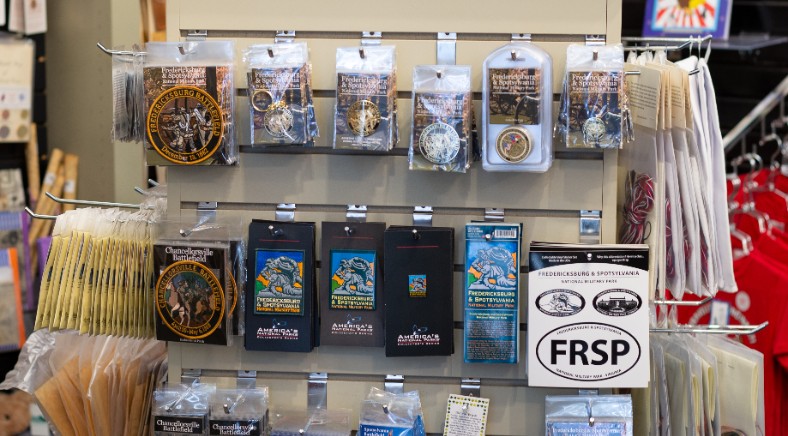
Photo: gift shop trinket display, National Park Service (NPGallery), public domain. Used as a thematic stand-in; not a photo of the actual exhibit.