
Beginner
A man went to an estate sale in Michigan. An estate sale is a sale of things from someone’s home. The man was looking for old records and furniture.
In a hallway, he saw a small painting. It showed some shells on a dark background. He turned the painting over. He saw a name on the back, and he thought he knew it.
He paid $30 for the painting.
The painting was by Gertrude Abercrombie. She was an artist from Chicago. She painted it in 1951. She died in 1977.
An art expert checked the painting. It was real. Then it went to an auction in New York.
At the auction, the painting sold for $1.35 million. That is a record price for her art. The painting is very small. It is only 8 inches by 11 inches.
Vocabulary
- estate sale — a sale of the things in a person’s home
- shell — the hard outside part of a sea animal
- painting — a picture made with paint
- artist — a person who makes art
- expert — a person who knows a lot about one subject
- real — not fake
- auction — a sale where people say how much they will pay, and the highest price wins
- record — the highest or best ever
Comprehension Check
Discussion Prompts
- Have you ever bought something cheap that turned out to be worth a lot?
- Do you like to shop at second-hand stores or sales? Why or why not?
- If you found a painting like this, would you sell it or keep it?
Intermediate
A $30 purchase at a Michigan estate sale turned into a $1.35 million payday. A small painting by the Chicago artist Gertrude Abercrombie sold at auction in New York, setting a new record for her work.
The buyer is a “picker,” someone who shops at sales to find items to resell. He was looking for records and furniture when he noticed a small painting in a hallway. It showed a group of shells on a dark background. When he turned it over, he saw a name on the back that he recognized.
The painting is called “Alderman Merriam’s Shells.” Abercrombie painted it in 1951 and gave it to a doctor in Kalamazoo, Michigan, in exchange for medical care. It was shown in several cities in the early 1950s and then disappeared from public view. It stayed in the doctor’s collection until his estate sale, more than 70 years later.
The picker did some research and then checked a catalog from a recent Abercrombie exhibition. He found a photo of the same painting. An expert on the artist confirmed that it was real.
At the auction on Thursday, the painting sold for $1.35 million. That was well above what experts had expected, and it is the highest price ever paid for an Abercrombie.
Vocabulary
- picker — a person who buys items at sales to resell them
- resell — to sell something you bought
- recognized — knew something because you had seen it before
- in exchange for — as payment for
- disappeared — went away and could not be found
- collection — a group of items kept together
- confirmed — said that something is true
- expected — thought something would happen
Comprehension Check
Discussion Prompts
- The painting was lost for more than 70 years. Why do you think it stayed hidden for so long?
- Would you take a chance on an unusual item at a sale? What would you look for?
- Some people say art is worth whatever someone will pay. Do you agree?
Advanced
A painting that sat unnoticed in a Michigan hallway for decades has just become the most valuable work ever sold by Chicago artist Gertrude Abercrombie. A buyer who paid $30 for it at an estate sale saw it fetch $1.35 million at auction in New York.
The buyer, a “picker” who had come in search of records and midcentury furniture, was drawn to the small canvas despite its modest size of eight by eleven inches. It depicts a cluster of shells against a dark ground, with a single shell seemingly suspended in a black void. Although it reads as a simple still life, each shell appears to have its own light source, which gives the scene an enigmatic, dreamlike quality.
The consignor, who asked to remain anonymous, did not stop at a hunch. He changed a family vacation so that he could visit a touring Abercrombie retrospective in Milwaukee, where he found a photograph of the same painting in the exhibition catalog. A leading Abercrombie scholar then authenticated the work. Its provenance proved clear. Abercrombie had traded the painting in 1952 to a Kalamazoo physician in exchange for medical care, and it remained with him until his estate was sold.
Abercrombie, who died in 1977, enjoyed a cult following in Chicago but received little national acclaim in her lifetime. Her paintings turned up at garage sales and thrift stores for years. That obscurity has faded, and prices have surged while curators increasingly look beyond New York. The $1.35 million result far exceeded expectations and set a new auction record for her work.
Vocabulary
- consignor — a person who gives an item to an auction house to sell
- retrospective — an exhibition that shows the work of an artist over many years
- authenticated — proved to be genuine
- provenance — the history of who has owned an object
- acclaim — public praise
- obscurity — the state of being unknown
- surged — rose quickly and strongly
- enigmatic — mysterious and hard to understand
Comprehension Check
Discussion Prompts
- The consignor verified his hunch with research before selling. How does evidence change the value of an unusual find?
- Abercrombie received little acclaim in her lifetime but is celebrated today. Why do some artists gain recognition only after they are gone?
- The article suggests that “discovery stories” attract as much attention as the art itself. Does the story behind an object change how you value it?
Original story: “Painting bought for $30 at estate sale auctioned for $1.35 million”, UPI (October 2, 2026). Additional reporting from CBS News Chicago and WBEZ.
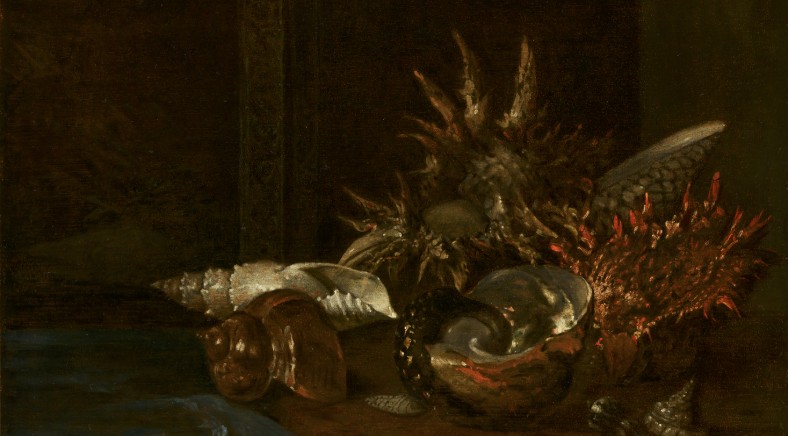
Photo: “Still Life with Shells” by Willem Kalf (17th century), Mauritshuis, public domain via Wikimedia Commons. Used as a thematic stand-in; not an image of the actual painting.