
Beginner
Tennis has four very big tournaments. One of them is called Wimbledon, in England. Another one is called the US Open, in New York City.
At Wimbledon, players must wear almost all white clothes. This rule is very old and very strict. Players cannot wear colorful shirts or shoes.
The US Open is different. Players can wear bright colors. They can wear red, blue, yellow, or any color they like. There is one small rule. Their clothes must have a small brand logo, not a huge one.
Fans at the US Open can wear almost anything, too. They just need to wear a shirt and shoes.
A tennis official named Eric Butorac explained why. He said the US Open is “more similar to America.” He said American fans are loud and love to show excitement. He said this is why the tournament allows so much color and freedom.
Vocabulary
- tournament — a sports competition with many matches
- strict — following rules very carefully, with no exceptions
- colorful — having many bright colors
- bright — very light or vivid in color
- brand — the name or symbol of a company
- logo — a small picture or symbol that represents a company
- official — a person with an important job at an organization or event
- freedom — the ability to choose or act as you like
Comprehension Check
Discussion Prompts
- Do you prefer strict rules like Wimbledon’s, or more freedom like the US Open’s? Why?
- What colors do you like to wear when you go to a sports event or a celebration?
- Do you think clothing rules can tell us something about a country’s culture?
Intermediate
Among the four Grand Slam tennis tournaments, few contrasts are as striking as the difference in dress codes between Wimbledon and the US Open.
At Wimbledon, players are required to wear attire that is almost entirely white, down to their shoes, socks, and even undergarments. The rule, rooted in Victorian-era tradition, has remained one of tennis’s most rigidly enforced customs for over a century.
The US Open takes a starkly different approach. According to Eric Butorac, senior director of player relations for the United States Tennis Association, the tournament’s dress code “has nothing to do with colors.” Players are free to wear whatever bright colors they choose, though their clothing must come from an approved manufacturer, and brand logos are limited to a modest size, roughly three inches by two inches.
Spectators enjoy similar freedom. Beyond requiring shirts and footwear, and prohibiting clothing with offensive imagery, the US Open imposes no formal dress code on fans at all.
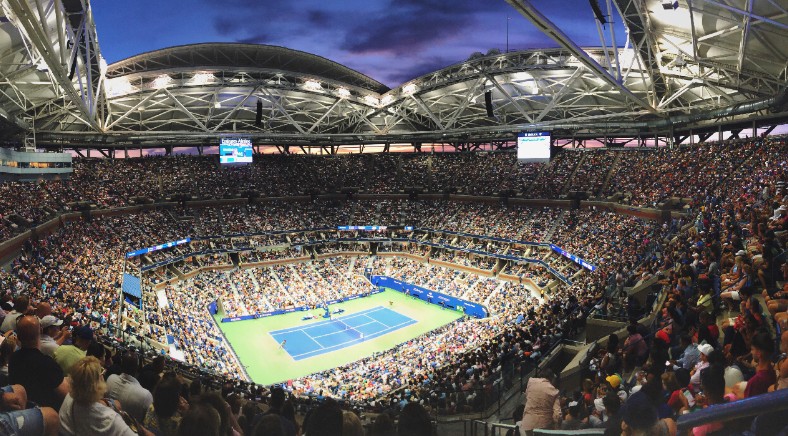
Butorac attributes the tournament’s relaxed approach to its cultural identity. “We’re definitely a Slam that’s more similar to America,” he said. “We’re the biggest stadium. We pay the most prize money. We’re the loudest… You come into Arthur Ashe Stadium and it’s people standing and screaming, but that’s sort of iconic to America.”
Vocabulary
- contrast — a noticeable difference between two things
- attire — clothing, especially for a particular purpose or occasion
- rooted — having origins in something, deeply connected to a source
- rigidly — strictly, without flexibility
- starkly — in a way that is very clear or noticeable
- manufacturer — a company that makes products
- spectator — a person who watches an event
- iconic — widely recognized as representing something important
Comprehension Check
Discussion Prompts
- Butorac describes the US Open as “louder” and more expressive than Wimbledon, connecting this to American culture. Do you think sporting events in your country reflect cultural values in similar ways?
- Wimbledon’s dress code has lasted for over a century. Why do you think some traditions remain strict while others, like the US Open’s, become more relaxed over time?
- If you attended a major sports event, would you prefer a stricter dress code or more freedom to express yourself? What would influence your choice?
Advanced
Among the four Grand Slam tournaments, few distinctions are as visually striking, or as culturally revealing, as the divergence in dress codes between Wimbledon and the US Open.
Wimbledon’s rule requiring players to wear attire that is almost entirely white, extending even to shoes and undergarments, is rooted in Victorian-era tradition and remains one of the most rigidly enforced customs in professional sport. The US Open, by contrast, has cultivated a markedly different identity. As Eric Butorac, senior director of player relations for the United States Tennis Association, put it, the tournament’s dress code “has nothing to do with colors.” Players may wear whatever vibrant hues they choose, subject only to modest restrictions, apparel must come from an approved manufacturer, and branded logos are capped at roughly three by two inches.
Spectators are afforded comparable latitude. Aside from baseline requirements, shirts and footwear must be worn, and clothing bearing offensive imagery is prohibited, the tournament imposes no meaningful sartorial restrictions on fans.
Butorac situates this permissiveness within a broader narrative about the tournament’s cultural self-conception. “We’re definitely a Slam that’s more similar to America,” he explained. “We’re the biggest stadium. We pay the most prize money. We’re the loudest… You come into Arthur Ashe Stadium and it’s people standing and screaming, but that’s sort of iconic to America.” In this framing, the absence of a rigid dress code functions not as an oversight but as a deliberate expression of national character, positioning the US Open in direct contrast to Wimbledon’s more restrained, tradition-bound aesthetic.
Vocabulary
- divergence — a difference or separation between two things that were once similar
- markedly — noticeably or clearly
- vibrant — full of energy and life, especially in color
- latitude — freedom of action or choice
- sartorial — relating to clothing or style of dress
- permissiveness — the quality of allowing a wide range of behavior
- self-conception — the way a person or organization understands and defines itself
- tradition-bound — strictly following established customs or practices
Comprehension Check
Discussion Prompts
- The article frames the US Open’s relaxed dress code as a deliberate expression of “national character” rather than a mere absence of rules. Do you find this framing convincing? Why or why not?
- Consider other examples of institutions or events, in sports or elsewhere, where a rule (or the lack of one) seems to reflect a broader cultural value. What examples come to mind?
- Wimbledon’s tradition has persisted for over a century despite changing social norms. What factors do you think allow certain traditions to endure while similar rules elsewhere relax or disappear?
Original story: “14 Unique Rules US Open Players and Spectators Must Follow, Including Dress Codes and Bathroom Breaks” by Skyler Caruso and Nicole Pomarico, People (August 2025, updated 2026). Featured photo: Laslovarga, Wikimedia Commons, CC BY-SA 3.0.