
Beginner
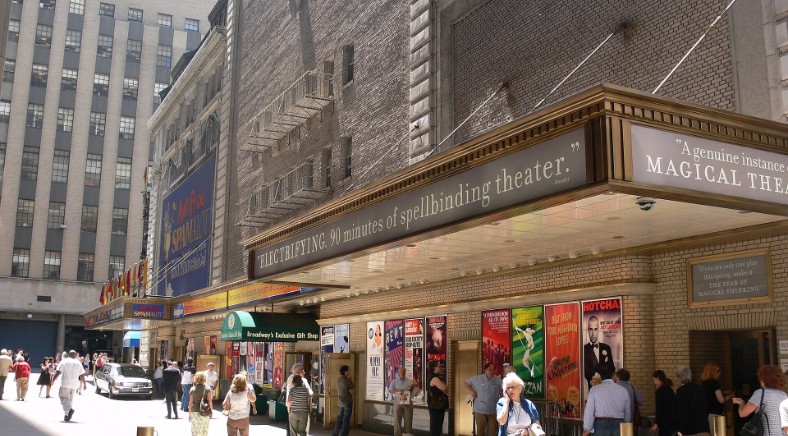
Broadway is a famous theater area in New York City. It has many theaters. Actors sing and dance in shows there.
Every year, people who work on Broadway hold a big sale. It is called the Broadway Flea Market. A flea market is a place where people sell used things. At this sale, fans can buy things from real Broadway shows, like posters and costumes. The money helps sick people get food and medicine. The charity is called Broadway Cares.
This year was the 40th sale. It was on September 27. That day, a big storm hit New York. The sale moved inside a large hall. Thousands of fans still came.
The sale also had an auction. At an auction, the person who offers the most money wins. One person paid $30,000 for a trip to London. The trip came with tickets to shows.
In the end, the sale raised $1,487,927. The first sale was in 1987. That year, actors from a show called A Chorus Line put two tables outside their theater. Since then, the sale has raised more than $22 million.
Vocabulary
- theater — a building where people watch shows
- flea market — a place where people sell used things
- costume — clothes that an actor wears in a show
- storm — very bad weather with strong wind or rain
- fan — a person who loves something
- auction — a sale where the person who offers the most money wins
- ticket — a paper or card that lets you go to a show
- raise — to collect money for a good reason
Comprehension Check
Discussion Prompts
- Do you like going to the theater? What was the last show you saw?
- Would you buy something from a famous show? What would you choose?
- Why do people give money to help others?
Intermediate
A nor’easter, a strong storm that hits the US East Coast, did not stop thousands of Broadway fans from shopping at the 40th annual Broadway Flea Market & Grand Auction. The event, held on September 27, moved indoors to the Hammerstein Ballroom in Manhattan. It raised $1,487,927 for Broadway Cares/Equity Fights AIDS, a charity that helps people with HIV/AIDS and other serious illnesses.
Shoppers could browse 63 tables filled with posters, costumes, props, set pieces, and old Playbills from Broadway shows. Eighteen Broadway and Off-Broadway shows ran tables. The table for The Lost Boys raised $104,376, a record for a single table. All the tables together raised $685,124.
The live auction brought in a record $562,300. The top item was a trip to London with show tickets and business class flights, which sold for $30,000. Another bidder paid $20,000 for the chance to shadow a stage manager at Wicked. The silent auction added $206,450. A guitar signed by cast members of Moulin Rouge! The Musical sold for $15,500.
The event began in 1987, when cast members of the original A Chorus Line set up two tables outside their stage door. Over 40 years, it has raised more than $22 million. Last year’s event set a record at about $1.63 million. Danny Whitman, the executive director of Broadway Cares, said the day was a reminder of what theater people do best, which is to show up for each other.
Vocabulary
- nor’easter — a strong storm that hits the northeast coast of the United States
- annual — happening once every year
- browse — to look at things in a shop without a plan to buy a certain thing
- prop — an object that actors use on stage
- record — the highest or best ever
- shadow — to follow someone at work in order to learn from them
- signed — having a person’s name written on it by that person
- charity — a group that raises money to help people
Comprehension Check
Discussion Prompts
- Why do you think so many people came out in a storm to support this event?
- Would you pay a lot of money for a signed item or a special experience? Which is worth more to you?
- What charity events happen in your city or country?
Advanced
Undeterred by a nor’easter that pushed the festivities indoors, thousands of theater devotees turned out on September 27 for the 40th annual Broadway Flea Market & Grand Auction. The event, held at Manhattan’s Hammerstein Ballroom, raised $1,487,927 for Broadway Cares/Equity Fights AIDS. That figure falls slightly short of last year’s record of about $1.63 million, but it is a strong result given the weather.
Sixty-three tables, stocked by 18 Broadway and Off-Broadway productions and other theatrical organizations, offered stage-used props, costumes, set pieces, vintage Playbills, and other one-of-a-kind keepsakes. Together they raised $685,124, led by The Lost Boys, whose $104,376 total set a record for a single table. The live auction brought in a record $562,300, and its top lot, a London trip that included West End tickets and business class flights, fetched $30,000. A silent auction added $206,450, and an online feature called FleaBay raised a record $34,053.
The sale’s roots are modest. In 1987, cast members of the original A Chorus Line set up two tables outside their stage door in Shubert Alley. Across 40 editions, the event has raised more than $22 million. Since 1988, Broadway Cares has awarded more than $300 million in grants for essential services for people with HIV/AIDS and other critical illnesses across the country.
Danny Whitman, the group’s executive director, said the day was a reminder of what theater people do best, which is to show up for one another. He said the money will translate into meals, medication, healthcare, and hope for people who need them most.
Vocabulary
- undeterred — not discouraged or stopped by a problem
- devotee — a person who is very enthusiastic about something
- keepsake — an object kept to remember a person, place, or event
- vintage — old and valued for being from an earlier time
- lot — an item or group of items sold together at an auction
- fetched — sold for a particular price
- modest — small or simple in size or amount
- grant — money given for a specific purpose
Comprehension Check
Discussion Prompts
- Events like this rely on collectibles and experiences to raise money. Why might these move people to give more than a simple donation would?
- The event grew from two tables into a $22 million tradition. What makes a small local effort grow into a lasting institution?
- Whitman said the day showed what theater people do best. How can an industry or community use its own particular skills to support a cause?
Original story: “Despite Nor’Easter, Broadway Flea Market Raised Nearly $1.5 Million”, Playbill (September 29, 2026), by Andrew Gans. Learn more at BroadwayCares.org.
Photo: The Shubert and Booth Theatres in New York City’s theater district, by Andreas Praefcke, CC BY 3.0 via Wikimedia Commons. The photo is a stand-in and does not show the event.
