
Beginner
Sri Lanka is an island country near India. Some of its animals live nowhere else in the world.
In 2004, scientists went to the mountains in the middle of Sri Lanka. They wanted to study small animals. They put traps near a farm and a forest. Peanut butter did not work there. So the scientists used pieces of burnt coconut.
In March 2004, they caught two small mice. The mice were as small as a child’s hand. They looked a little different from other mice.
The scientists studied the two mice for more than 20 years. They looked at the mice’s bodies and their DNA. DNA is like a code inside every living thing.
Now the scientists know the truth. It is a new species, or a new kind of animal. Its name is Mus dumbara. People also call it the Dumbara spiny mouse. It has some spiny hairs on its back.
In 2014 and 2015, the scientists went back. They used traps for many nights. They did not catch another one. So no one knows how many of these mice live today. So far, scientists have found the mouse in only one small place.
Vocabulary
- island — land with water all around it
- scientist — a person who studies the world and how things work
- trap — a tool that catches an animal
- mountain — a very high hill
- coconut — a large fruit with a hard brown shell
- species — one kind of animal or plant
- DNA — a code inside every living thing that tells its body how to grow
- spiny — covered with sharp, thin hairs
Comprehension Check
Discussion Prompts
- Do you like small animals like mice? Why or why not?
- Why do you think the scientists waited more than 20 years to share their news?
- What animal or plant in your country is special or rare?
Intermediate
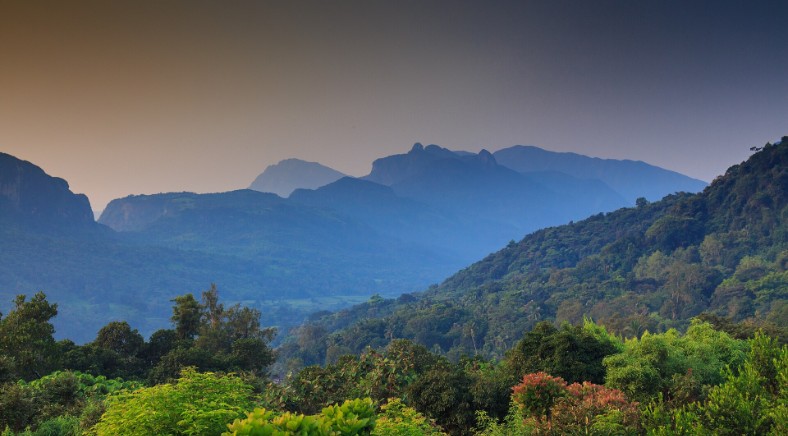
Scientists in Sri Lanka have officially named a new species of mouse, more than 20 years after they first caught one. The animal is called the Dumbara spiny mouse (Mus dumbara). Its name comes from the Dumbara Mountains, also known as the Knuckles Mountain Range, in central Sri Lanka.
The story began in March 2004. Researchers set traps along the edge of a forest next to rice fields near the village of Puwakpitiya. Peanut butter, the usual bait for mice, did not work there. So the team used pieces of burnt coconut, a food that was more familiar to the local mice. On March 11, a pitfall trap caught a small mouse that looked different. Six days later, a second one was caught in a baited trap. Both were female, and each was no bigger than a child’s palm.
The mice looked like another highland species, Mayor’s mouse, but the tail length and head shape were different. Proving that the mice were a new species took more than two decades of work. Researchers compared the mice’s bodies and skulls with those of close relatives. The strongest evidence came from DNA, which showed a genetic difference of more than 11.7 percent from the two closest species.
Then the team ran into a problem. Study leader Suyama Boyagoda returned in 2014 and 2015 and set traps for about 1,900 trap nights. A trap night means one trap set for one night. She did not catch another one. So scientists still know very little about how many Dumbara spiny mice exist.
Experts say the mouse should be treated as possibly at risk until more is known. The Knuckles Range is a UNESCO World Heritage Site, but forest edges are in danger from new roads, farming, and plantations. Sri Lanka has 16 species of rats and mice, and six of them live nowhere else. Experts say island-wide surveys are needed to learn more about these small animals.
Vocabulary
- bait — food used to attract an animal into a trap
- pitfall trap — a hole in the ground that an animal falls into
- highland — an area of high land, like mountains
- skull — the bones of the head
- genetic — related to genes, the information in living things that is passed from parents to young
- evidence — facts that show something is true
- plantation — a very large farm where one crop is grown
- survey — a careful study of an area to find out what lives there
Comprehension Check
Discussion Prompts
- The first two mice were caught in 2004, but the species was named in 2026. Why might science take so long?
- Why do you think small animals get less attention than big animals like elephants or tigers?
- Should countries spend money to study and protect animals that most people never see? Why or why not?
Advanced
More than two decades after two unfamiliar mice turned up in field traps, Sri Lankan researchers have formally described a new species. Mus dumbara, the Dumbara spiny mouse, has been recorded from just one valley in the Knuckles Mountain Range in the island’s center, and it has already proved elusive.
In March 2004, a team working along the boundary between rice paddies and forest near the village of Puwakpitiya set pitfall traps and baited live traps. Peanut butter, the standard lure, failed to attract the local mice, so the researchers turned to pieces of burnt coconut. A small female turned up in a pitfall trap on March 11, and a second followed six days later. Both had soft gray-fawn fur threaded with spiny guard hairs and a slender tail longer than the head and body.
At first glance, they resembled Mayor’s mouse, a highland species. Years of anatomical and genetic analysis showed otherwise. The skull has a moderately prominent ridge above the eye socket, and DNA revealed a divergence of more than 11.7 percent from its two closest Sri Lankan relatives. When lead author Suyama Boyagoda returned in 2014 and 2015, about 1,900 trap nights produced no further specimens. That left researchers with scant information about the mouse’s population or range.
Co-author Madhava Meegaskumbura, who collected the first specimen, says the species may survive in unsurveyed forest fragments, persist at very low densities, or have declined since 2004. Although the Knuckles Range is a UNESCO World Heritage Site, forest margins remain vulnerable to road construction, land clearance, encroachment, and the spread of plantations. Until surveys clarify its status, he says, the mouse should be treated as potentially at risk of extinction.
The discovery also highlights a wider gap in knowledge. Sri Lanka has 16 species of rats and mice, six of them endemic, or found nowhere else. In recent decades, scientists have described more new frogs, lizards, and freshwater crabs than mammals. Sampath Goonatilake of IUCN Sri Lanka says fieldwork on small mammals is demanding and expensive, up-to-date identification guides are scarce, and a comprehensive island-wide program would need sustained funding.
Vocabulary
- elusive — hard to find or catch
- lure — something used to attract an animal
- endemic — found only in one particular place
- divergence — a difference or a split between two things
- scant — very little, barely enough
- encroachment — slow movement into land that belonged to someone or something else
- vulnerable — easy to harm or damage
- sustained — continuing for a long time without stopping
Comprehension Check
Discussion Prompts
- A species was recognized more than 20 years after it was first caught. What does the delay tell us about how science balances caution with speed?
- The mouse lives in a protected area, yet its habitat edges remain vulnerable. Why isn’t legal protection always enough?
- Small, unglamorous species often get less research funding than famous ones. Should conservation money be spread differently?
Original story: “Wildlife researchers attempted to trap mice with peanut butter and burnt coconut. They discovered a new species instead”, Good Good Good (September 28, 2026), by Malaka Rodrigo, originally published by Mongabay. Species description in ZooKeys.
Photo: The Knuckles Mountain Range in Sri Lanka, by Thusitha Jayasundara, CC BY-SA 4.0 via Wikimedia Commons. The photo shows the region and not the mouse.
